
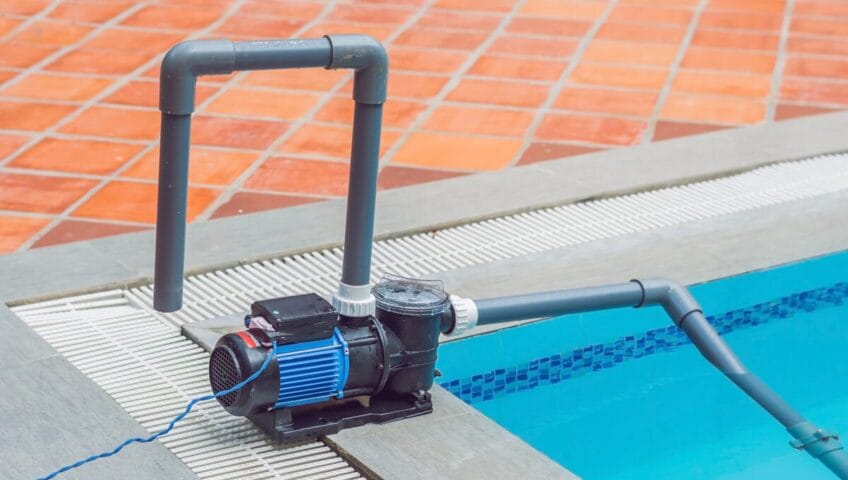
Owning a private swimming pool in your Dubai villa is one of life’s great luxuries. On a hot evening in July, there is nothing quite like stepping into cool, crystal-clear water just a few metres from your back door. But that sparkling water does not look after itself. Dubai’s extreme heat, intense UV radiation, daily desert dust, and high evaporation rates make pool maintenance in this city significantly more demanding than almost anywhere else in the world.
This guide covers everything you need to know about swimming pool maintenance in Dubai in 2026 — from weekly chemical checks and seasonal care routines to equipment servicing, costs, and how to choose the right professional maintenance partner for your villa.
Why Swimming Pool Maintenance in Dubai Is Different
Before diving into the specifics, it is worth understanding why maintaining a pool in Dubai requires more effort and attention than in cooler climates.
During June, July, August, and September, air temperatures in Dubai regularly exceed 42°C, and pool water temperatures can climb to 34–38°C. At these temperatures, chlorine dissipates three to four times faster than it would in a temperate climate, meaning what looks like a perfectly balanced pool in the morning can drop to unsafe chlorine levels by the afternoon.
Intense UV radiation makes this worse. Sunlight breaks down free chlorine rapidly, which is why stabiliser chemicals (cyanuric acid) are added to slow UV-induced degradation — though stabiliser levels themselves must be carefully monitored, since too much reduces chlorine’s effectiveness.
On top of the chemistry challenges, Dubai’s desert environment means dust and fine sand settle into pool water daily. After a haboob (sandstorm), the amount of debris entering a pool can be extreme, stressing the filtration system and demanding immediate attention.
Finally, evaporation in Dubai’s arid climate removes 3–5mm of water from a pool every single day — equivalent to 10,000–15,000 litres per month for an average-sized villa pool. As water evaporates, dissolved minerals concentrate in what remains, which throws off the chemical balance and can lead to scaling on tiles, cloudy water, and equipment damage over time.
Understanding these local factors is the first step to maintaining a healthy, safe, and beautiful pool year-round.
The Right Chemical Balance for Dubai Pools
Getting the water chemistry right is the foundation of all pool maintenance. In Dubai’s climate, water chemistry can shift quickly, so testing more frequently than you might expect is essential.
- pH Level: Keep your pool’s pH between 7.2 and 7.6. A pH that is too high makes chlorine ineffective; a pH that is too low causes skin and eye irritation and can corrode your pool’s surfaces and equipment. Test pH levels at least twice a week — every three to four days during peak summer.
- Chlorine: Maintain free chlorine between 1 and 3 ppm (parts per million). Because Dubai’s heat and UV burn through chlorine so quickly, you may need to add chlorine far more frequently in summer than in winter. Liquid chlorine (sodium hypochlorite) works fast and is ideal after heavy pool use or a sandstorm. Chlorine tablets provide slow, consistent sanitising for regular maintenance. Many villa owners in Dubai are switching to salt chlorination systems, which continuously convert dissolved salt into chlorine — a gentler and more cost-effective approach for long-term ownership.
- Total Alkalinity: Maintain alkalinity between 80 and 120 ppm. This acts as a buffer that keeps your pH stable. Low alkalinity causes pH to swing wildly; high alkalinity leads to cloudy water and scale formation.
- Calcium Hardness: Keep calcium hardness between 200 and 400 ppm. Dubai’s evaporation rates cause calcium to concentrate over time, which can lead to white scale on tiles and rough surfaces. Adding fresh water regularly helps dilute calcium levels.
- Cyanuric Acid (Stabiliser): Keep stabiliser levels between 30 and 50 ppm. This protects your chlorine from UV breakdown. If stabiliser builds up above 100 ppm, it begins to block chlorine’s sanitising ability — at which point a partial water change may be needed.
- Shock Treatment: In Dubai’s climate, shocking your pool (adding a high dose of chlorine to quickly destroy bacteria, algae spores, and organic contaminants) should be carried out weekly during summer, and after every sandstorm or heavy pool party.
Weekly Pool Maintenance Checklist for Dubai Villas
A consistent weekly routine is the most effective way to keep your pool healthy without expensive emergency interventions. Here is what a thorough weekly service should include:
- Skim the surface — Remove floating debris, leaves, and insects daily (or twice daily after dust storms)
- Brush walls and tiles — Brush the pool’s interior surfaces to prevent algae from taking hold, especially in corners and along the waterline
- Vacuum the pool floor — Manual or automatic vacuuming removes settled dust, sand, and debris that the filter misses
- Test and adjust chemicals — Check pH, chlorine, and alkalinity levels and correct as needed
- Empty skimmer and pump baskets — Clogged baskets reduce circulation and strain the pump
- Check water level — Top up water lost to evaporation to keep the skimmer working properly
- Run the filtration system — In summer, run filters for 10–12 hours per day; in cooler months, 6–8 hours is typically sufficient
Monthly Pool Maintenance Tasks
Beyond the weekly routine, a number of deeper tasks should be carried out each month:
- Deep clean the filter — Backwash sand filters or rinse cartridge filters thoroughly. A clogged filter is one of the most common causes of cloudy pool water in Dubai.
- Inspect the pump and motor — Listen for unusual noises. Check seals for leaks. Ensure the pump is primed and circulating water efficiently.
- Check the pool heater or chiller — Dubai villas often use chillers to cool pool water in summer. Inspect the unit for performance and clean the condenser coils.
- Examine lights and electrical fittings — All underwater fittings must be sealed and watertight. Faulty pool electrics are a safety hazard.
- Test calcium hardness and stabiliser levels — These change more slowly than pH and chlorine but must be monitored monthly.
- Partial water replacement — During peak summer, consider replacing 10–15% of pool volume monthly to reduce mineral and chemical build-up from evaporation.
Seasonal Pool Care in Dubai: Summer vs Winter
Summer (May to September)
This is the most demanding period for pool maintenance in Dubai. The priorities are:
- Increase chemical testing to every 2–3 days
- Shock the pool weekly to counter accelerated chlorine loss
- Run filtration for 10–12 hours per day
- Use a pool cover at night to reduce evaporation (this alone can cut water loss by 30–40%)
- Check the chiller unit is functioning before the heat peaks in May
- Monitor for algae growth — warm water is ideal for algae and green pools can develop within 48 hours of chemical imbalance
Autumn/Spring (October to November & March to April)
These transitional months are ideal for deeper servicing:
- Full filter clean and inspection
- Equipment check — pumps, heaters, automation systems
- Reset chemical baselines after the stress of summer
- Clean and descale tiles
- Check pool waterproofing for any cracks or seepage
Winter (December to February)
Dubai winters are mild but pool water can cool to 18–22°C — comfortable for swimming but a period when:
- Chemical consumption reduces significantly (test once a week)
- Filtration can be reduced to 6–8 hours per day
- Pool heaters should be activated and inspected to maintain a comfortable swimming temperature (typically 26–28°C)
- This is the best season for any structural repairs or renovation work, as the pool is easier to drain and work on in cooler conditions
Common Pool Problems in Dubai and How to Fix Them
Green or cloudy water — Almost always caused by low chlorine and algae growth. Shock the pool immediately, brush all surfaces, run the filter continuously for 24–48 hours, and re-test chemicals.
White scale on tiles — Caused by high calcium hardness and mineral build-up from evaporation. A professional acid wash or tile descaling service is needed. Prevent it by topping up with fresh water regularly and keeping calcium hardness in range.
Strong chlorine smell — Counterintuitively, a strong smell means the pool has too little free chlorine and too many chloramines (chemical compounds formed when chlorine reacts with body oils and sweat). Shock the pool and ensure all swimmers rinse before entering.
Weak water circulation — Usually a blocked filter, clogged skimmer basket, or pump issue. Check and clean baskets first, then inspect the filter. If circulation remains poor, have a technician inspect the pump.
Water loss beyond normal evaporation — If your pool is losing more than 5mm per day, you may have a structural leak. A professional leak detection service can locate the problem before it causes serious structural damage.
Sand or dust at the bottom of the pool — A sign that the filter’s laterals may be broken, allowing filtered material back into the pool. The filter will need inspection and possible replacement of internal components.
DIY vs Professional Pool Maintenance in Dubai
Many villa owners begin with DIY pool maintenance and find it workable during winter. But during the long, brutal summer months, the pace of chemical change and the demands of equipment management make professional servicing genuinely worthwhile.
A professional pool maintenance company in Dubai brings several advantages:
- Experience reading Dubai’s specific chemical dynamics
- Access to commercial-grade chemicals and testing equipment
- Scheduled visits that ensure nothing is missed during busy periods
- Early detection of equipment issues before they become costly failures
- Full documentation of chemical logs for health and safety compliance
For most Dubai villa owners, the recommended approach is twice-weekly professional visits throughout summer, dropping to once-weekly or fortnightly in the cooler months.
Understanding Annual Maintenance Contracts (AMC) in Dubai
An Annual Maintenance Contract (AMC) is the most popular way for Dubai villa owners to manage pool upkeep. Under an AMC, a professional pool company provides regular scheduled visits, chemical supply, and routine servicing for a fixed monthly or annual fee.
What a good AMC should include:
- Scheduled visits (typically twice per week during summer)
- Chemical testing and balancing at every visit
- Skimming, brushing, and vacuuming
- Filter cleaning and backwashing
- Equipment checks (pump, motor, lights, automation)
- Emergency callouts for urgent issues
Typical AMC costs in Dubai (2026):
For a standard residential villa pool, monthly AMC costs typically range from AED 500 to AED 1,500 per month, depending on pool size, visit frequency, and whether chemicals are included.
Some AMC contracts exclude the cost of chemicals, so clarify this when comparing quotes. A contract that includes chemicals provides price certainty and removes the hassle of sourcing and storing pool chemicals yourself.
5 Tips to Reduce Pool Maintenance Costs in Dubai
- Invest in a pool cover — Reducing evaporation cuts both water costs and the chemical replenishment needed when topping up with fresh water.
- Switch to a salt chlorination system — Higher upfront cost but significantly lower ongoing chlorine expenses and a gentler swimming experience.
- Upgrade to a variable-speed pump — These use up to 80% less electricity than single-speed pumps and can pay for themselves within a year.
- Use a pool automation system — Smart controllers manage filtration schedules, chemical dosing, and lighting automatically, reducing waste and human error.
- Sign an AMC early — Booking a maintenance contract before summer avoids premium pricing during peak demand.
Why Choose Poolsco for Swimming Pool Maintenance in Dubai?
At Poolsco Landscaping, we have been maintaining swimming pools across Dubai’s villa communities for years. Our maintenance teams understand the specific demands that Dubai’s climate places on pool chemistry, equipment, and surfaces — and we build maintenance programmes around those realities, not generic schedules designed for cooler climates.
Whether you need a one-off deep clean, a seasonal service before summer hits, or a comprehensive AMC that covers everything from twice-weekly chemical visits to emergency callouts, Poolsco’s pool maintenance team is ready to help.
Frequently Asked Questions
How often should a Dubai villa pool be serviced?
During summer (May–September), twice-weekly visits are recommended due to the speed at which chemicals deplete in the heat. In cooler months, once-weekly servicing is usually sufficient for a well-maintained pool.
Do I need a pool chiller in Dubai?
A chiller is not legally required, but it is strongly recommended for comfort. Without one, pool water can exceed 35°C in peak summer — too warm for refreshing or safe swimming, particularly for children.
How often does pool water need to be fully replaced in Dubai?
With proper filtration and chemical management, full water replacement is rarely necessary. Partial top-ups (replacing 10–15% monthly in summer to counter evaporation and mineral concentration) are the standard approach.
What causes a pool to turn green in Dubai?
Green water is caused by algae growth, which occurs when chlorine levels fall too low — something that can happen very quickly in summer heat. Shock treatment, continuous filtration, and surface brushing will clear the problem, typically within 24–48 hours.
Is it worth signing a swimming pool AMC in Dubai?
For most villa owners, yes. An AMC provides predictable monthly costs, ensures nothing is missed during the demanding summer period, and protects your pool equipment from the avoidable failures that come from inconsistent maintenance.
How long do pool pumps last in Dubai?
With regular servicing, a quality pool pump should last 8–12 years. Dubai’s summer heat and long daily run times do accelerate wear, so annual pump inspections are advisable.
Can I maintain my Dubai pool myself?
Basic tasks like skimming and visual checks are easy enough to handle yourself. However, accurate chemical testing, filter maintenance, and equipment servicing in Dubai’s climate are best left to professionals, particularly during summer months when the margin for error is narrow.